Mastering the Psychology of the Bluff in Poker – Poker Bluff Guide
Poker is one of the most played games in any land-based or online casino. Bluffing is a big part of the game, and nearly every poker player does it as part of their game plan. Regardless of experience or poker variant, knowing when to bluff and how to do it properly is an essential tool in any poker player's arsenal. Not only does bluffing add to poker an element of excitement and fun, but it is also a strategic tool that helps players win money at the tables.
8 Best Online Casinos in Ireland
Ranked licence, published terms and lobby depth · 8 operators
- 1
 BC.Game Casino
120% up to $4 000 + 400 free spins
Live tables come from Evolution. Licence: Curaçao, online since 2017. Welcome package carries 40x wagering, minimum deposit €10.
Visit BC.Game18+. New players only. T&Cs apply. - 2
 7BitCasino
Welcome offer changes often — open the cashier for the current terms.
Runs on a Curaçao licence, online since 2014. Live tables come from Evolution.
Visit 7Bit18+. New players only. T&Cs apply. - 3
 Spin Casino
100% up to €1 000
Licensed by Alderney and Ontario (AGCO), online since 2002. Live tables come from Evolution. Welcome package carries 35x wagering, minimum deposit €10.
Visit Spin18+. New players only. T&Cs apply. - 4
 HellSpin Casino
100% up to €2 400 + 150 free spins
Runs on a Curaçao and Without Official License licence, online since 2022. Live tables come from Evolution. Welcome package carries 40x wagering, minimum deposit €30.
Visit HellSpin18+. New players only. T&Cs apply. - 5
 Woocasino
Welcome offer changes often — open the cashier for the current terms.
Live tables come from Evolution. Licence: Curaçao, online since 2020.
Visit Woocasino18+. New players only. T&Cs apply. - 6
 22bet Casino
100% up to €1 500 + 150 free spins
Live tables come from Evolution. Licence: Kahnawake and Curaçao, online since 2017. Welcome package carries 35x wagering, minimum deposit €10.
Visit 22bet18+. New players only. T&Cs apply. - 7
 CasinoChan
Welcome offer changes often — open the cashier for the current terms.
Visit CasinoChan18+. New players only. T&Cs apply. - 8
 National Casino
Welcome offer changes often — open the cashier for the current terms.
Visit National18+. New players only. T&Cs apply.
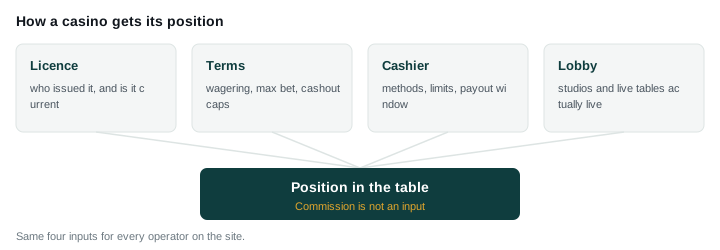
Ranked on licence, published terms and lobby depth — never on the size of the commission. Some links earn us a fee at no cost to you. 18+, T&Cs apply, 1800 936 725.
So why do players bluff? Should you bluff? What are the benefits of poker bluffing? How is bluffing done right? Our poker experts at Top Eire Casinos.co.uk have written this comprehensive guide that answers all these questions and covers everything you need to know for mastering the psychology of poker bluffing.
How To Bluff When Playing Poker
So you may have heard all about the wonderful art of bluffing, and you may have pulled a bluff or two at a friendly poker night. But when there is serious cash and pride on the line, it's a lot harder to implement bluffing into a sound, consistent poker strategy. But do not worry, because bluffing is an art form that can be learnt and perfected in most cases. At the very least, an awareness of the key giveaways can be the difference between bluffing your way to a handy stack win and leaving the table empty-handed.
If you want to take your poker game to the next level, you need to incorporate bluffing into your poker strategy. The key to success with bluffing is to know how to bluff effectively. Pulling a bluff will not guarantee you a winning hand, but it can increase your chances and certainly add excitement to the game.
Questions To Ask Before Bluffing
Timing is everything when executing a poker bluff. When you weigh up whether to bluff or not, there are some key questions you should ask yourself:
- Is my opponent showing any signs (tells) that hint at the strength of their hand?
- Am I using bluffs intelligently, balancing them with playing solid hands?
- Is my opponent a nit (a tight poker player who calls all bets and only gets involved in big pots with good hands)?
- Did I correctly size my bets through each street (this makes your poker bluffing look more realistic)?
Poker Bluffing Tips
Poker Bluffing is often associated with aggressive play. It is partially true, as aggressive players tend to be better at bluffing and win more hands. However, even cautious players can bluff in poker. They just need to step out of their comfort zone and find an aggressive side to their game. Bluffing is seen as an aggressive way to play poker because you risk betting on potentially weaker hands than your opponent.
So, does that mean that you should always bluff and be aggressive? Absolutely not, there is an art to poker bluffing, and you can start learning by following these tips:
- Learn the Table: If you understand the dynamics of the table you are playing at (types of players, available chip stack, positions, etc.), it is easier to know how much you should bluff during a poker game.
- Poker Bluffing on Stakes: If stakes are low, such as during the first betting round, it is not worth bluffing when calls are likely to be made. Similarly, if you are betting a low amount, hold off on bluffing until more cards are dealt.
- Count the Players in the Hand: How many players remain 'in' on the hand? In simple terms, the more players there are, the less chance you have to pull a successful bluff. It is easier to bluff fewer players as there is less chance of someone calling your bluff.
- Think About How You are Perceived at the Table: How do the other players view you? Have you recently been caught bluffing, or are you known as an aggressive player? Needless to say, if you are known as a poker bluffer, you may want to rethink your poker strategy.
- Look for Tells: If you knew what cards your opponent was holding, deciding when to bet or not would be easy. While you cannot get that information, your opponent may display "tells" that hint at the strength of their card.
- Improve your Tells: A tell is a movement, facial gesture, or some other action that gives away the strength of your hand to an opponent. If you twitch whenever you have a good hand, good poker players will pick up on it and use it against you. Try to learn how to hide your poker tells. But beware that it is sometimes easier said than done.
- Manage Your Bankroll: A poker bluff is all about taking a risk, such as betting on a weaker hand while trying to convince your opponent to fold. While those risks can lead to rewards, they can also lead to losses. Having control over your budget is essential. You must feel comfortable with your bankroll before bluffing on large bets.
- Online Poker Guide – Develop Your Online Poker Strategy
- Online Poker Guide: Difference between Video and Live Dealer
- How to Play Poker – Beginners Guide to Rules and Strategy
Quick Bluffs
Most poker bluffs – especially for Hold 'em variants – are known as "quick bluffs" or a "small ball". These are bluffs following a small bet that could lead to a quick win and a small winning pot. The idea here is that you will have a higher success rate and, if not, will only lose small sums from your bankroll. Think of it as lowering the risk of poker bluffing, albeit for small profits.
Semi-Bluffs
Imagine you have a hand that does not have any winning combination following the flop. However, this hand has some potential on the next cards. Following the bets of other players, you decide to raise. Remember, you do not really hold a winning hand but are raising anyway. This type of bluff is known as a "semi-bluff".
It is only a semi-bluff because there is a chance you land a winning hand when the following cards are drawn. You raise in the hope your opponents will fold, and you can win the pot. If they do call you, you still have a chance of winning. You should only be doing this every so often as this type of poker bluff can become transparent quickly.
Stone-Cold (Naked) Bluffs
The most famous poker bluff is probably a "stone-cold bluff” or a “Pure Bluff”. It is essentially poker bluffing on a completely worthless hand. Hollywood movies would have you believe stone-cold bluffs are what poker is all about, depicting players that just randomly bluff on worthless hands, with all players at the table bluffing at the same time.
In reality, stone-cold bluffs are not used frequently because they are extremely risky. Your hand has virtually no chance of winning, so you are relying entirely on your opponent folding. There have been some famous examples of successful stone-cold bluffs in poker competitions, and they can be fun on poker nights with friends, but it's rarely a good idea to play this kind of poker bluff.
How To Spot When A Poker Opponent Is Bluffing
So far, we’ve discussed the best ways to bluff against opponents, but what about knowing when other players are poker bluffing? The best way to know if your opponent is bluffing is to get some understanding of the strength of their hand. Noticing “tells” is the best way to gain knowledge of a concealed hand and can help you decide if an opponent is bluffing.
Of course, the whole point of bluffing is to trick your opponent into thinking you have a better hand than what you do. When playing poker at a physical venue, you can spot "tells" such as body language, posture and eye movements. However, what about when playing online poker? Is it possible to know if your opponent is playing a poker bluff if you cannot see them? The answer is yes. You can spot online bluffing by following these simple tips:
Bet Size
How much your opponent bets is a fantastic way to tell if someone is poker bluffing when playing online poker. Check out these three scenarios, which show common bluffing techniques amongst online players:
- Your opponent regularly bets around two-thirds of the pot, even on the preflop, and keeps doing so even if their hands are not good. You will have to wait for this to become a pattern, but if the player is frequently betting most of the pot and not winning, they are probably bluffing.
- If the player bets close to, or on the total, pot size and hits winning hands but then bets lower on other hands, they are likely to be holding a losing hand on that lower bet. The player has shown they will bet high with a good hand. A lower bet shows their hand may not be as good, but they are bluffing in the hope that you fold.
- The third scenario is a poker bluff using minimum bets. If your opponent bets minimum amounts but remains in the game, this could be showing they are bluffing and holding a weak hand. It is worth noting some players are willing to bet min to “see what happens” on the flop, so be careful about how you read minimum bet situations.
How Quickly Are Bets Made
Many online poker players forget some of the gamesmanship of real-life poker. When they get a great hand in online poker, the excitement gets the better of them, and they will bet instantly without thinking. If done consistently, making quick wagers reveals an important betting habit.
If you see your opponent bets instantly on winning hands but then takes longer to bet on weak hands, you may have spotted a tell. It could indicate the player is less sure about betting on a poor hand, and if they do bet, it is likely a poker bluff.
Overly Aggressive Players Love to Poker Bluff
While bluffing in poker requires you to be aggressive, some players take it too far and become too aggressive at the poker table. When a player becomes overly aggressive, they tend to bluff too much, bluff when they do not need to, and their bluffing often makes no sense:
- Playing too much: If your opponent is playing hands a lot, they must frequently be bluffing because it is unlikely they have a strong hand that often.
- Betting on the flop: Good poker players with strong hands will usually place relatively low/medium bets on the flop to boost the pot without revealing that their hand is good. Aggressive players go too far and will sometimes bet over 75% of the limit following the flop.
Remember that the examples on this page are general guidelines. Although these are all frequent tells, not all poker players will display them. Some players are exceptional at disguising their poker bluffs and showing no tells, while others may trick you by using a common tell in reverse.
Another golden of poker bluffing is that you can only start making predictions on your opponent's bluffing once you have played a few hands. You should always give new players the benefit of the doubt. If you notice they start winning with bluffed hands, note their playing style and start using your knowledge against them.
Now that you have a good understanding of poker bluffs and are armed with these essential tips, you can start applying your knowledge and practising your bluffing skills. Soon, you can become successful at using bluffs and knowing when opponents are bluffing:
- Learn to read a hand: We may be asking a bit much if you are just an online poker player looking for a bit of fun. However, if you can quickly learn your opponent's betting patterns (how often they bet, fold, or call), you may be able to know when they are poker bluffing.
- Bluff intelligently: If you have just got a raise by bluffing on the flop, it does not mean you should just go all guns blazing and continue bluffing for the following cards. Always make decisions on each street and decide whether it is best to continue bluffing (remember, you could lose money if your bluff fails).
- Do not bluff on every hand: Even if your opponent is displaying weaknesses hand after hand, you should avoid poker bluffing on each round. You will be over bluffing, and a wise opponent will quickly learn your patterns and start to turn your bluffs against you.
- Select a betting range: Before you start a poker game, choose a range that you are comfortable bluffing with. How much are you willing to bet – and potentially lose – on a poker bluff?
Examples Of Poker Bluffs
Remember, all of your poker bluffs should make sense and serve a purpose within the game. Sometimes the best way to understand poker bluffing is to look at some examples.
Example Of When To Bluff
You are staying in a hand with a flush lined up during a game of Texas Hold 'em, wagering an increasing amount through each draw in the hope the winning combination will land. However, the cards do not land the flush following the flop and you are left without a winning chance. You have two choices, fold and lose your aggressive continuation bet wagers or bluff and hope your opponents fold. In this case, you should consider bluffing because your consistent bets should tell your opponent you have a strong hand.
Example Of When Not To Bluff
The best time to hold on and not bluff is when it is not very profitable for you. If the pot odds are small and opponents are not interested, it may not be worth bluffing. Obviously, if you have a great hand, you should avoid poker bluffing and bet wisely to win the biggest possible pot.
Poker Bluffing Conclusion
With all the knowledge and tips our poker experts at Top Eire Casinos.co.uk provide in this guide, you can start building your poker strategy and bluff like a pro. However, remember that as poker is a game that involves luck and skill, no poker bluff will guarantee a win. Sometimes your opponents will surprise you by playing their own successful bluffs. Bluffing adds a lot of excitement to a poker game, but always remember that fun and excitement is what it is all about. So always gamble responsibly and keep a close eye on your bankroll.
Now it is time to put all your bluffing knowledge to practice. Select one of our recommended online poker sites, sign up and start applying your bluffing skills. While at it, don't forget to claim a generous welcome bonus to get you started at the tables!
Learn to Play Craps Online - From Beginner to Winner
- Casino Strategy
- Casino Games
- Beginner Guides
Philosophy of Gambling
- Casino Strategy
- Quick Tips
- Beginner Guides
Psychology of Poker Players
- Casino Strategy
- Poker
- Beginner Guides